Telegram has over 950 million active users worldwide, but Russia just fully blocked it in February 2026. Vietnam restricted it in 2025. People in China and Iran have had years-long bans without Telegram VPN.
The situation isn’t calming down, it’s escalating. And The fix is a VPN. But not just any VPN.
We will talk about the global state of Telegram blocks in 2026, why governments keep banning it, and the 10 best VPNs to get you back online.
Why Does Telegram Keep Getting Governments Upset?
Telegram is a cloud-based messaging platform founded in 2013 by Pavel Durov and his brother Nikolai. What started as a privacy-conscious alternative to WhatsApp has grown into something far more complex: a platform for 200,000-member group chats, open channels that broadcast to unlimited subscribers, bots, and massive file transfers up to 2 GB per file.
Two things make Telegram uniquely threatening to authoritarian governments. First, its end-to-end encrypted “Secret Chats” are mathematically impossible to intercept without the user’s device. Second, its enormous channel reach means a single broadcaster can mobilize hundreds of thousands of followers instantly — which, in a politically tense country, is exactly what governments fear.
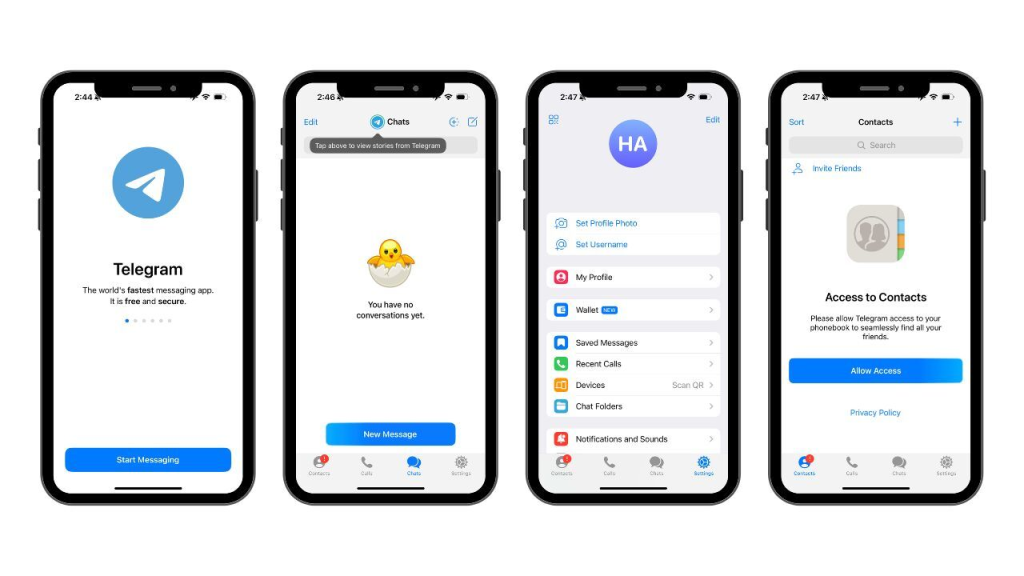
Telegram’s CEO Pavel Durov was arrested in France in August 2024 over allegations related to the platform’s facilitation of organized crime, a case that sent shockwaves through the digital rights community and added fresh political pressure on the platform globally.
The result? Over 31 countries have banned or significantly restricted Telegram since 2015, affecting more than 3 billion people, and the list keeps growing.
The 10 Best Telegram VPNs in 2026
Getting Telegram working reliably with a VPN in a restricted country, especially one with sophisticated censorship tools, requires the right combination of speed, obfuscation, and airtight privacy.
The following 10 VPNs have been evaluated specifically for Telegram use — speed for calls and file sharing, obfuscation for restricted regions, and privacy rigor for high-risk environments.
1. NordVPN
- Servers: 9,000+ across 130+ countries
- Avg. Speed (NordLynx): 200–700 Mbps
- Protocols: NordLynx (WireGuard-based), OpenVPN, IKEv2, NordWhisper (obfuscated)
- No-logs audits: Deloitte (2023, 2025)
- Jurisdiction: Panama Price: from ~$3.39/month (2-year plan)
- Simultaneous connections: 10
NordVPN is the gold standard for a reason. In benchmark tests, it consistently delivers 85–95% speed retention on nearby servers using NordLynx — meaning Telegram voice calls stay crisp and large file transfers are rarely a problem. Its NordWhisper protocol, introduced in 2025, is specifically built to bypass network filtering and is proving effective in Russia and China where standard obfuscation occasionally gets detected.
Panama jurisdiction puts it outside 5/9/14 Eyes reach. Four independent audits (more than any other major provider) confirm it retains nothing about user sessions. Threat Protection Pro adds malware blocking and DNS-level ad filtering. For most Telegram users in most countries, NordVPN is the starting and ending point.
The limitation? It’s not cheap without a long-term commitment, and the base plan doesn’t include Threat Protection Pro.
Best for: Users in Russia, China, Iran, or anyone wanting maximum reliability and speed.
2. ExpressVPN
- Servers: 3,000+ across 105+ countries
- Avg. Speed (Lightway Turbo): 175 Mbps typical; 1,000+ Mbps peak
- Protocols: Lightway (proprietary), OpenVPN, IKEv2, L2TP
- No-logs audits: KPMG, Cure53
- Jurisdiction: British Virgin Islands
- Price: from ~$4.99/month (2-year plan)
- Simultaneous connections: 8
ExpressVPN’s Lightway Turbo protocol uses multi-thread routing and connection acceleration, specifically tuned for high-latency scenarios. That means Telegram voice and video calls stay stable even on congested or throttled networks — a meaningful advantage in countries that throttle rather than fully block.
Its obfuscation has a proven track record inside China and the UAE, where many competitor Telegram VPNs fall flat. All servers run on RAM-only infrastructure — nothing stored, nothing to seize. The BVI jurisdiction adds a strong legal buffer.
The main criticism is price — ExpressVPN sits at the premium end. But for users in the most restrictive environments, that premium buys measurable reliability that cheaper alternatives don’t consistently deliver.
Best for: Users in China, the UAE, and any heavy-censorship environment where obfuscation must work reliably.
3. Surfshark
- Servers: 3,200+ across 100+ countries
- Avg. Speed (WireGuard): 190 Mbps nearby; up to 750–900 Mbps on 10 Gbps network
- Protocols: WireGuard, OpenVPN, IKEv2
- No-logs audits: Deloitte (2023, 2025)
- Jurisdiction: Netherlands
- Price: from ~$1.99/month (2-year plan)
- Simultaneous connections: Unlimited
Surfshark’s unlimited simultaneous connections is genuinely unique at this price point — one subscription covers every device in a household, including routers. Its NoBorders Mode activates automatically in restricted regions, switching to obfuscated servers and alternative connection methods. Camouflage Mode disguises VPN traffic from ISPs.
Surfshark Telegram VPN runs on a 10 Gbps network infrastructure, which explains why it maintains 75–90% speed retention in tests. Deloitte verified its no-logs policy twice in 2023 and 2025. CleanWeb blocks ads, trackers, and malicious links — useful given the volume of content flowing through Telegram channels.
The Netherlands is within the Nine Eyes alliance, which is worth noting. However, there are no mandatory data retention requirements, and audits confirm there’s nothing meaningful to request.
Best for: Families, multi-device households, and budget-conscious users who don’t want to compromise on speed.
4. Proton VPN
- Servers: 17,400+ across 117+ countries
- Avg. Speed (WireGuard): 240+ Mbps
- Protocols: WireGuard, OpenVPN, IKEv2, Stealth (obfuscation)
- No-logs audits: SEC Consult, Cure53
- Jurisdiction: Switzerland
- Price: from ~$4/month (free tier available)
- Simultaneous connections: 10 (paid)
Proton VPN’s Secure Core architecture routes traffic through privacy-hardened servers in Switzerland, Iceland, and Sweden before exiting elsewhere. If a downstream server is compromised, the Secure Core layer still protects the user’s identity. That’s a meaningful distinction for journalists and activists operating in Russia or Iran with a genuinely elevated threat model.
Switzerland sits outside all intelligence-sharing alliances, with some of the strongest data protection laws in the world. Proton’s Stealth protocol is designed from the ground up to disguise VPN traffic as regular HTTPS — not a retrofitted solution — which gives it a technical edge in aggressive DPI environments.
The honest limitation: Proton runs at around 240 Mbps on WireGuard versus over 1,000 Mbps for ExpressVPN in direct tests. For Telegram messaging and voice calls, that’s more than enough. For very large file transfers, the gap is occasionally felt.
Best for: Journalists, activists, and anyone needing maximum privacy assurances in high-risk environments.
5. Mullvad
- Servers: 850+ across 39+ countries
- Avg. Speed (WireGuard): ~350 Mbps
- Protocols: WireGuard, OpenVPN
- No-logs audits: Third-party verified
- Jurisdiction: Sweden
- Price: Fixed €5/month (~$5.80), no long-term discounts
- Simultaneous connections: 5
Mullvad is the VPN that privacy purists actually use. Creating an account requires no personal information — not even an email address. You receive an anonymous account number. Payment can be made in cash by mailing it to their Gothenburg headquarters. When Swedish police raided Mullvad’s offices in 2023, they left empty-handed — because there was genuinely nothing stored to take.
Mullvad supports quantum-resistant WireGuard by default, putting it ahead of most competitors on next-generation encryption. The fixed pricing eliminates bait-and-switch promotional games.
The limitations are real: 850 servers across 39 countries is modest, streaming platform unblocking is unreliable, and customer support is email-only. But if Telegram use is primarily privacy-critical communication rather than casual messaging, Mullvad’s threat model is essentially unmatched.
Best for: Privacy purists, security researchers, and anyone needing to minimize their digital footprint.
6. Private Internet Access (PIA)
- Servers: 35,000+ across 91 countries (largest tested)
- Avg. Speed (WireGuard): 250–350 Mbps
- Protocols: WireGuard, OpenVPN, IKEv2
- No-logs audits: Deloitte
- Jurisdiction: USA
- Price: from ~$2.03/month (2-year plan)
- Simultaneous connections: Unlimited
PIA’s 35,000-server network means you’ll rarely face congestion or need to wait for a usable server in a specific location. Its MACE feature blocks DNS-level ads, trackers, and malware. Open-source apps across all platforms mean independent researchers can verify exactly what the software does.
The US jurisdiction gives some users pause. However, PIA has appeared in two separate legal cases and produced zero user data in both — demonstrating that the no-logs policy holds under real legal pressure.
Obfuscation via Shadowsocks and SOCKS5 proxy support works in most restricted environments, though it doesn’t match ExpressVPN’s Lightway in the most aggressive DPI environments like China’s Great Firewall.
Best for: Power users who want granular encryption control, massive server choice, and court-tested no-logs credentials.
7. CyberGhost
- Servers: 10,000+ across 100+ countries
- Avg. Speed (WireGuard): 250–350 Mbps
- Protocols: WireGuard, OpenVPN, IKEv2
- No-logs audits: Deloitte
- Jurisdiction: Romania
- Price: from ~$2.03/month (2-year plan)
- Simultaneous connections: 7
CyberGhost’s Smart Rules feature stands out for everyday Telegram users: set the VPN to automatically connect to a specific server and launch Telegram every time your device turns on. No manual steps required. In a restricted country, that automation matters more than it sounds.
Its NoSpy servers — physically located and managed by CyberGhost in Romania — reduce reliance on third-party data centers. Romania sits outside major surveillance alliances. The 45-day money-back guarantee is the longest of any major VPN, making it easy for first-time users to try without risk.
OpenVPN speeds can be inconsistent, and obfuscation isn’t as powerful as ExpressVPN for China’s Great Firewall. But for most other restricted countries, CyberGhost is consistently reliable and genuinely simple to use.
Best for: Telegram newcomers who want a set-it-and-forget-it experience, and users in countries with moderate restrictions.
8. PureVPN
- Servers: 6,500+ across 65+ countries
- Avg. Speed: ~141 Mbps (US servers, tested)
- Protocols: WireGuard, OpenVPN, IKEv2, L2TP
- No-logs audits: 4 independent audits including Always-On Audit
- Jurisdiction: British Virgin Islands
- Price: from ~$1.99/month (5-year plan)
- Simultaneous connections: 10
PureVPN’s most distinctive feature is its Always-On Audit arrangement, where independent auditors have continuous access to verify its no-logs policy is being maintained at any time — not just during scheduled review windows. That’s a meaningfully higher bar for transparency than most competitors.
Its broad coverage across 65 countries makes it particularly useful for accessing region-specific Telegram channels only accessible from particular locations. Average speeds of ~141 Mbps on US servers are more than sufficient for HD video calls over Telegram.
Speed isn’t class-leading compared to NordVPN or ExpressVPN, and the best pricing requires a very long commitment.
Best for: Users who want access to region-specific Telegram content and value the Always-On Audit transparency model.
9. Windscribe
- Servers: 69+ countries
- Avg. Latency added: 10–20ms
- Protocols: WireGuard, OpenVPN, IKEv2, Stealth
- No-logs: No-identifying-logs policy
- Jurisdiction: Canada
- Price: Free plan available; paid from ~$5.75/month
- Simultaneous connections: Unlimited (paid)
Windscribe is the most capable free VPN available for Telegram in 2026. The free plan includes access to servers in 11 countries, strong encryption, and a Firewall feature that prevents any traffic from leaking if the VPN drops — Telegram messages simply won’t send until the VPN reconnects. That’s a meaningful safety net for users in restricted regions.
Its Stealth protocol disguises traffic as ordinary HTTPS browsing, which bypasses most corporate and school firewalls effectively. The paid plan removes data limits and adds more server locations.
The limitation of the free tier is bandwidth — heavy Telegram use, especially large file transfers, burns through it quickly. Canada’s Five Eyes jurisdiction is worth considering, though the no-identifying-logs policy means there’s nothing useful to share.
Best for: Occasional Telegram users who need a free option, or those blocked by workplace and school firewalls.
10. Astrill VPN
- Servers: 300+ across 56+ countries
- Avg. Speed in China: 50–200 Mbps (variable)
- Protocols: WireGuard, OpenVPN, OpenWeb (proprietary), StealthVPN (obfuscated)
- Jurisdiction: Seychelles
- Price: from ~$12.50/month (no long-term discounts)
- Simultaneous connections: 5
Astrill doesn’t get as much mainstream press as NordVPN or ExpressVPN, but among people who actually live and work in China, it’s arguably the most consistently reliable VPN available. Its OpenWeb and StealthVPN protocols are purpose-built for the Great Firewall, employing obfuscation that has maintained reliability inside China for years — something larger competitors can’t match as consistently.
The tradeoff is cost. Astrill is significantly more expensive, with no long-term plan discounts. Speed inside China typically runs 50–200 Mbps depending on server load — sufficient for Telegram calls and file transfers.
If you’re based in mainland China and Telegram access is the primary need, Astrill is worth the premium. For users in other countries, the price-to-performance ratio doesn’t compete with NordVPN or ExpressVPN.
Best for: Long-term residents and workers in mainland China who need the most reliable Telegram access available.
Quick Comparison: Top 10 Telegram VPN
| VPN | Servers | Speed | Obfuscation | Audited No-Logs | Price/mo | Best For |
|---|---|---|---|---|---|---|
| NordVPN | 9,000+ / 130+ countries | 200–700 Mbps | NordWhisper (2025) | Deloitte x2 | ~$3.39 | Overall best |
| ExpressVPN | 3,000+ / 105+ countries | 175–1,000+ Mbps | Lightway Turbo | KPMG, Cure53 | ~$4.99 | Heavy censorship |
| Surfshark | 3,200+ / 100+ countries | 190–900 Mbps | NoBorders / Camouflage | Deloitte x2 | ~$1.99 | Unlimited devices |
| Proton VPN | 17,400+ / 117+ countries | 240+ Mbps | Stealth protocol | SEC Consult | ~$4.00 | High-risk users |
| Mullvad | 850+ / 39+ countries | ~350 Mbps | Limited | 3rd party | ~$5.80 | Anonymous accounts |
| PIA | 35,000+ / 91 countries | 250–350 Mbps | Shadowsocks | Deloitte | ~$2.03 | Power users |
| CyberGhost | 10,000+ / 100+ countries | 250–350 Mbps | Moderate | Deloitte | ~$2.03 | Beginners |
| PureVPN | 6,500+ / 65+ countries | ~141 Mbps | Moderate | 4 audits (Always-On) | ~$1.99 | Geo-unblocking |
| Windscribe | 69+ countries | Low latency | Stealth | Self-stated | Free / $5.75 | Free tier users |
| Astrill | 300+ / 56+ countries | 50–200 Mbps | OpenWeb / StealthVPN | Self-stated | ~$12.50 | China residents |
How to Set Up a Telegram VPN Step by Step?
Getting started takes under five minutes on any device.
Choose a VPN from the list above and subscribe. Download the app for your device — Windows, Mac, iOS, Android, and Linux are all supported by every major provider listed here. Install and log in.
Before opening Telegram, connect to a server in a country where Telegram is accessible. Germany, the Netherlands, Japan, and the United States are reliable choices. If you’re in China or Russia, look specifically for the obfuscated or stealth server option within the app — this step is critical in those countries.
Once connected, open Telegram. It should load and function normally. For voice and video calls, if quality seems degraded, try a geographically closer server — shorter physical distance means lower latency and better call quality.
If Telegram still doesn’t connect, try clearing the app cache, restarting Telegram with the VPN already active, or switching to a different server or protocol within the VPN app.
Is Using a VPN for Telegram Legal?
In most of the world, yes — VPNs are legal tools for privacy and security. But the answer gets complicated in the same countries where Telegram is blocked.
In China, non-government-approved VPNs are technically prohibited, but enforcement against individual users is rare. The government focuses on VPN providers and large-scale enterprise use, not ordinary people checking their messages. In Russia and Iran, using a VPN to access blocked services carries theoretical legal risk, but enforcement against individual civilians remains uncommon in practice.
In most democratic countries — the US, UK, EU member states, Japan, Australia — using a VPN for Telegram is entirely unrestricted.
The risk calculus is personal and context-dependent. What’s consistent across the board: a VPN that keeps no log
Where Is Telegram Blocked?
The censorship landscape has dramatically shifted since late 2025. Here’s where things stand as of March 2026.
Russia’s Full Block in February 2026
This is the development that’s shocked the tech world most recently. In February 2026, Russia moved to fully block both Telegram and WhatsApp, alongside Facebook and Instagram — all in a push to force its population onto “Max,” a state-owned, government-readable messaging app. All messages sent and received in Max can be read by Russian authorities.
The timing was extraordinary. Russian soldiers on the frontlines of the Ukraine war had been relying on Telegram for real-time drone alerts, battlefield coordination, and keeping in touch with families at home. The move drew rare internal backlash from pro-war military bloggers and soldiers. Reports from Bloomberg and Engadget described frontline communications genuinely disrupted by the blackout — compounded by the simultaneous loss of Starlink access in the region.
Amnesty International responded sharply in February 2026, with its Eastern Europe and Central Asia Director describing the moves as part of a broader pattern of state control over online communications, noting that blocking Telegram has far more to do with restricting free communication than protecting people from fraud.
For millions of Russian civilians and journalists, VPNs have now become not just convenient, but essential.
China: Blocked Since 2015
China’s block on Telegram predates most other restrictions. Telegram has been inaccessible on the mainland since 2015, sitting behind the Great Firewall alongside Facebook, Google, Twitter, and most of the Western internet. Human rights lawyers were using it to criticize the government, and that was enough for authorities to act.
Using a VPN for Telegram in China in 2026 is not criminally prosecuted for ordinary users, but most standard VPNs are also blocked. Only VPNs with robust obfuscation technology reliably punch through the Great Firewall consistently.
Iran: Banned Since 2018
Before the ban, nearly half of Iran’s 80 million people used Telegram daily. It was the country’s dominant messaging platform. After mass protests in 2017–2018, the government permanently blocked it, citing the app’s role in organizing demonstrations and spreading what it called “immoral content.”
Today, millions of Iranians still access Telegram exclusively via VPNs — the practice has become normalized. But circumvention tools carry real legal risk in Iran, so the VPN you choose matters enormously.
Vietnam: Blocked in 2025, Situation Still Unstable
In May 2025, Vietnam’s Ministry of Science and Technology ordered ISPs to block Telegram, citing that 68% of the platform’s nearly 10,000 local channels had been flagged as malicious. The government accused Telegram of ignoring multiple compliance notices. Service was partially restored later, but restrictions continue on many networks into 2026.
Pakistan: Repeat Temporary Bans
Pakistan has a pattern of on-and-off Telegram blocks dating back to 2017 — triggered by content regulators citing national security concerns. They’re often lifted after Telegram makes moderation commitments, but the cycle repeats. Pakistani users have learned to keep a VPN on standby at all times.
Turkmenistan and North Korea: Complete Blackouts
These two countries represent the extreme end of internet censorship. Telegram is effectively inaccessible in Turkmenistan as part of blanket internet controls. North Korea has almost no civilian internet access at all.
Somalia, Cuba, and Thailand: Crisis-Driven Blocks
Somalia banned Telegram in 2023 citing extremist propaganda. Cuba blocked it in 2021 during anti-government protests. Thailand restricted it in 2020 to suppress protest coordination. These bans tend to emerge during political crises, with varying enforcement afterward.
The Grey Zones: Belarus, Ukraine, Norway
Not every country has a total block. Belarus hasn’t banned Telegram outright, but users who follow government-designated “extremist” channels can face up to seven years in prison, according to Amnesty International. Ukraine banned Telegram on official government and military devices in late 2024 after intelligence revealed Russian services had been accessing user messages, including deleted ones. Norway restricts Telegram on government work devices over national security concerns.
The common thread? Telegram’s openness and scale have made it a lightning rod for governments trying to control the flow of information.
Can You Rely On Telegram’s Own Built-In Proxy?
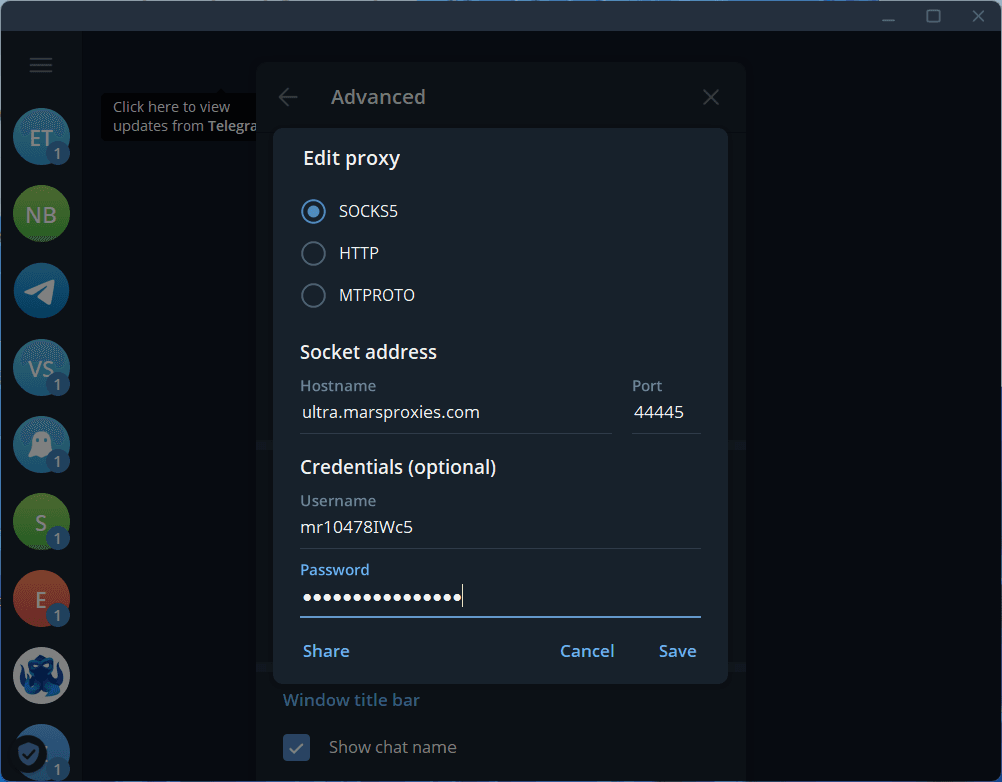
The answer is “yes” if you have a basic need only for Telegram. Telegram includes a built-in proxy feature that lets users route traffic through SOCKS5 or MTProxy servers. It’s simpler to configure than a VPN — no separate app required — and can work in some restricted environments.
The limitation is significant: the proxy only covers Telegram traffic.
Your browsing, other apps, and real IP address remain exposed to your ISP. For anyone in a country where accessing Telegram carries real-world risk, the built-in proxy offers a false sense of security. A proper VPN encrypts all traffic and hides your IP entirely — a meaningfully stronger protection.
Final Thoughts
Telegram’s global blocking situation is getting more complex, not simpler. Russia’s February 2026 crackdown is the most dramatic recent development — a country blocking its own military’s primary communication tool during an active war, just to force civilians onto a surveillance-friendly government alternative. That tells you everything about the priorities of governments that restrict Telegram: it’s not about fighting crime. It’s about control.
For users caught in the middle — whether in Russia, China, Iran, Vietnam, or anywhere else where Telegram has been swept up in a political crackdown — a reliable VPN remains the most practical and immediate solution available.